When we glance at the price of an item, we all know that number is not the amount that will come out of our wallet.
Sales tax adds nearly another 10%. By far, the largest portion goes to Nashville.
Except if you buy something at FedExForum or on Beale Street, the money stays in Memphis. That’s right. The tax stays right here. I’ll explain. Stick with me.
Years ago, just before FedEx Forum was built, I wrote a column for The Commercial Appeal at a moment when emotions in Memphis were raw and understandable.
Many argued the public money earmarked for an NBA arena should instead be spent directly on the poor. The needs were undeniable after all.
I believed then this was not an apples-to-apples comparison. The debate missed something essential.
The success of the Memphis Grizzlies, I suggested, would ultimately have more impact on issues of poverty, dignity and shared civic life than naysayers could imagine.
Cities don’t address generational poverty only through programs. They address it by building confidence, identity, economic energy and reasons for people to invest and stay. They address it by becoming places that believe in themselves.
More than two decades later, I believe that argument has proven true.
On game nights at FedExForum, something extraordinary happens. The lower bowl becomes more racially integrated than almost any church in Memphis on a Sunday morning.
People from different ZIP codes, different income levels, different political persuasions and different life experiences sit shoulder to shoulder, wearing the same Beale Street blue.
In a city still shaped by segregation, that shared civic space matters. It doesn’t solve poverty, but it humanizes us to one another. And that’s not nothing.
Now the Grizzlies stand at another crossroads. The team has chosen to rebuild, which means changes to the core team and time to see long-lasting winning results.
For fans, rebuilds are painful. They test loyalty and patience. They invite cynicism. It is tempting when wins are uncertain to disengage, to not renew season tickets.
I believe that would be a mistake.
I believe general manager Zach Kleiman and owner Robert Pera have made difficult, deliberate decisions, moving on from Desmond Bane and Jaren Jackson Jr., and quite possibly Ja Morant, not because they are indifferent to Memphis but because they are serious about bringing an NBA championship here.
That is no small ambition for a small-market franchise. It requires patience and courage. It also requires a city willing to endure the hard seasons of change to target that goal.
Few people in Memphis actually know Robert Pera personally. He keeps a remarkably low public profile. But some things about him are clear.
Across the NBA, small-market owners are asking their cities to build brand new arenas costing more than a billion dollars.
Oklahoma City is building one. Milwaukee did. Sacramento, California, did. Others are exploring similar paths. In city after city, public dollars are being committed to entire new facilities.
Pera is not asking Memphis for that.
Instead, rather than demanding a billion-dollar replacement, Pera is content with the State of Tennessee, not Memphis, investing in renovating FedEx Forum.
That matters. It signals long-term commitment without placing extraordinary new burdens on local taxpayers.
And that brings us back to the state taxes that stay right here in Memphis, an important fact too few Memphians are aware of.
The Tourism Development Zone surrounding FedExForum doesn’t send its revenue to Nashville. The sales generated inside the zone — from out-of-town fans staying in hotels, eating in restaurants, buying Grizzlies merchandise and parking Downtown — stay right here in Memphis.
When a family drives in from Little Rock for a weekend game, when fans fly in from Dallas or Chicago and spend the night, when visiting teams bring media and traveling staff who dine and shop Downtown, the additional tax revenue generated in that district is reinvested locally.
Hotel stays. Restaurant meals. Retail purchases. Parking garages. All of it generates revenue that remains in Memphis to support arena debt and surrounding improvements.
This isn’t money taken from classrooms or social services and shipped to Nashville. It’s revenue created because people come to Memphis for Grizzlies games and spend money here.
Your taxes from money spent in Midtown or Germantown go to Nashville. Taxes collected Downtown stay in Memphis thanks to the Grizzlies.
And now the state is adding to that investment. Thanks to the work of Memphis Mayor Paul Young and others collaborating with the Grizzlies, the State of Tennessee is committing $75 million to improvements on Beale Street and the surrounding district.
The goal is simple: make the area cleaner, safer, more attractive and more welcoming to both residents and visitors.
What is so bad about that? A revitalized Beale Steet benefits far more than a basketball team. It supports restaurants, hotel workers, musicians, small businesses and every Memphian who wants to feel proud of Downtown and our city.
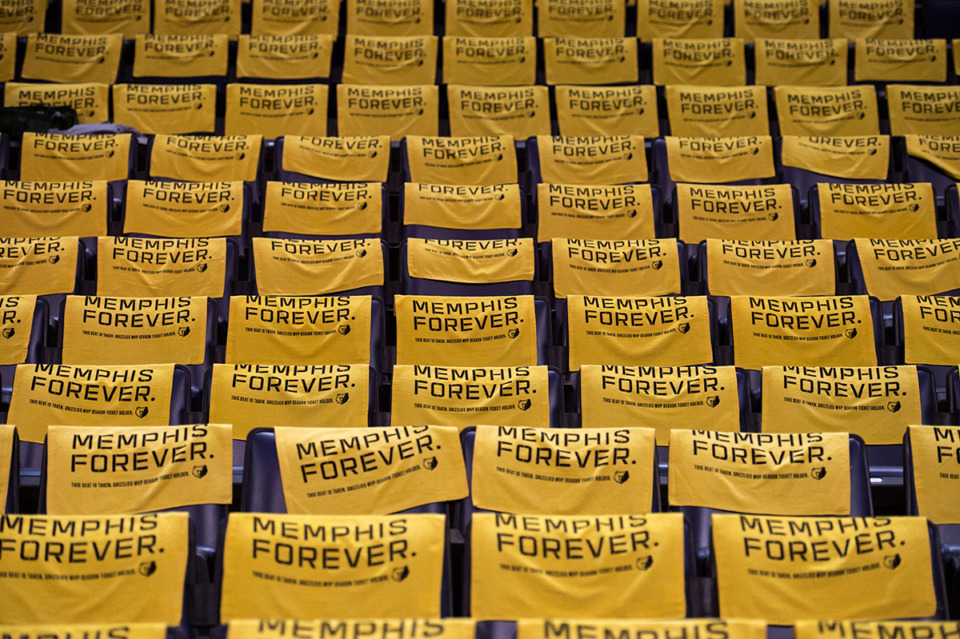
The organization has said it concerns them too many purchased seats sitting empty on game nights. For every game, thousands of tickets are bought and never used.
That is something Memphis can fix. If you have season tickets and can’t attend a game, give the tickets to your favorite nonprofit, school or congregation. Like Church Health, these groups all have employees, volunteers, patients and others who would love the opportunity to sit in that arena, experience that joy, to be part of something bigger than themselves, even during a rebuild. An empty seat is a lost opportunity for connection. Let’s keep the arena full.
Yes, I’d like the Grizzlies to sign a new lease at FedExForum. Yes, I would welcome more vocal affirmation from the organization about their commitment to Memphis. Civic relationships are reciprocal.
But this isn’t the time for Memphis to pull back.
We didn’t build FedExForum merely to host basketball games. We built it as a declaration Memphis belongs on the national stage. The Grizzlies are not a luxury item. They are deeply woven into the identity and economic vitality of our city.
Hard seasons don’t negate that, even though they test it.
Memphis has never been defined by ease. We have always been defined by resilience, by staying when others leave, by believing when belief is irrational.
Now is one of those moments.
The future of the Grizzlies and the future of Memphis have long been intertwined, and together, with steady faith and shared effort, both can thrive.
Read the full story on Daily Memphian.
The Rev. Dr. G. Scott Morris, M.D., is founder of Church Health. He is a regular contributor to The Daily Memphian.
The Daily Memphian is the must-read, primary daily online publication for intelligent, in-depth journalism in the Memphis community. The Daily Memphian reports on critical news, holds political, business and community leaders accountable, and engages with and entertains its readers – all while seeking truth, acting with integrity, and never fearing stories simply because of their negative or positive attributes. Led by a seasoned team of veteran journalists, The Daily Memphian is of Memphis, not just in Memphis, and seeks to tell the stories of this city.